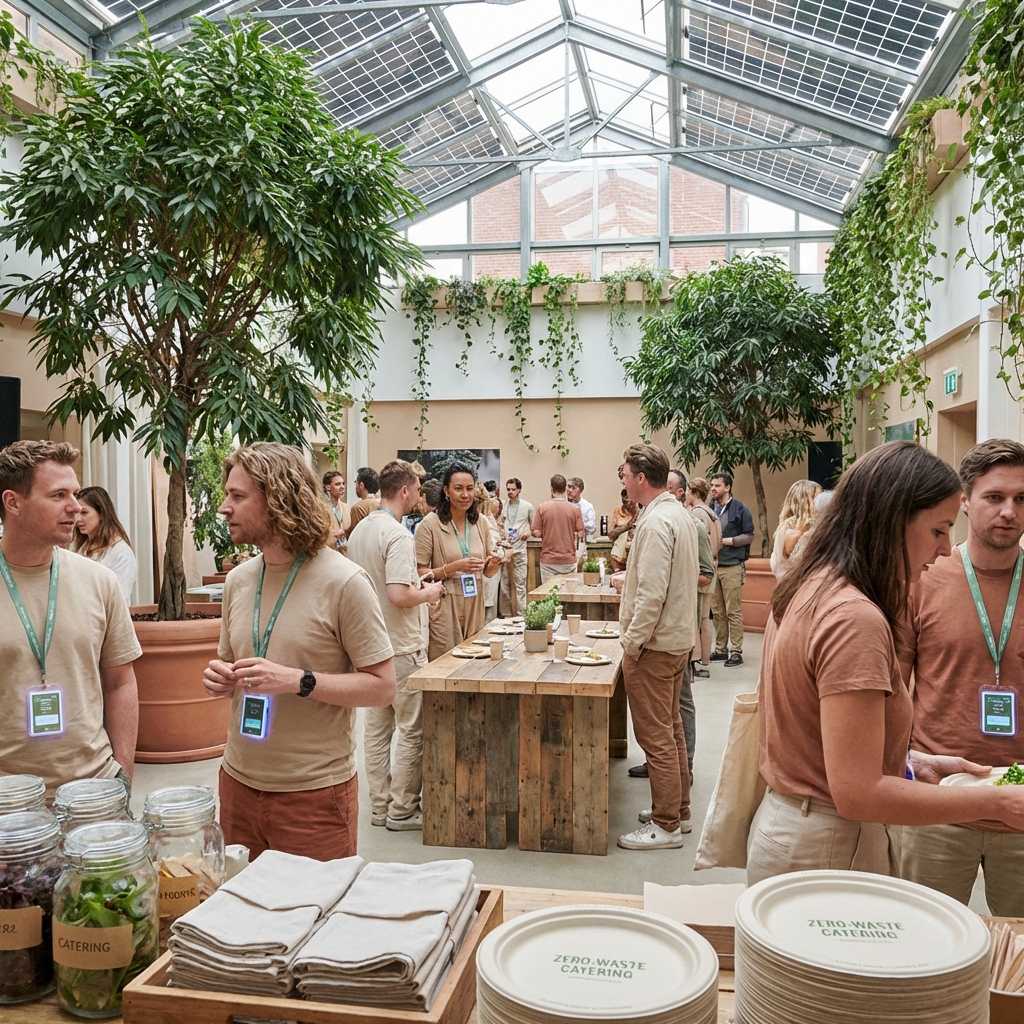
The events industry generates significant environmental impact, but forward-thinking planners are proving that spectacular events and sustainability can coexist. Here’s your comprehensive guide to planning eco-friendly events.
Venue Selection
Choose venues with green certifications like LEED or Green Key. Look for spaces with natural lighting, efficient HVAC systems, recycling programs, and accessible public transportation options.
Zero-Waste Catering
Work with caterers who source locally, offer plant-based options, use compostable serviceware, and have food donation partnerships for leftovers. Avoid single-use plastics entirely.
Digital-First Materials
Replace printed programs, signage, and promotional materials with digital alternatives. Use event apps for schedules, QR codes for information, and digital badges instead of plastic name tags.
Sustainable Swag
If you must provide swag, choose useful, high-quality items made from sustainable materials. Better yet, offer digital gifts, charitable donations, or experiences instead of physical items.
Carbon Offsetting
Calculate your event’s carbon footprint including travel, energy use, and waste. Purchase verified carbon offsets or invest in renewable energy projects to neutralize impact.
Transportation Solutions
Encourage carpooling, provide shuttle services, choose central locations near public transit, and offer virtual attendance options to reduce travel-related emissions.
Measure and Communicate
Track sustainability metrics and share results with attendees. Transparency about your environmental efforts builds credibility and encourages others to adopt similar practices.
Sustainable event planning isn’t just good for the planet—it’s increasingly expected by attendees and can reduce costs while enhancing your brand reputation.